TLDR
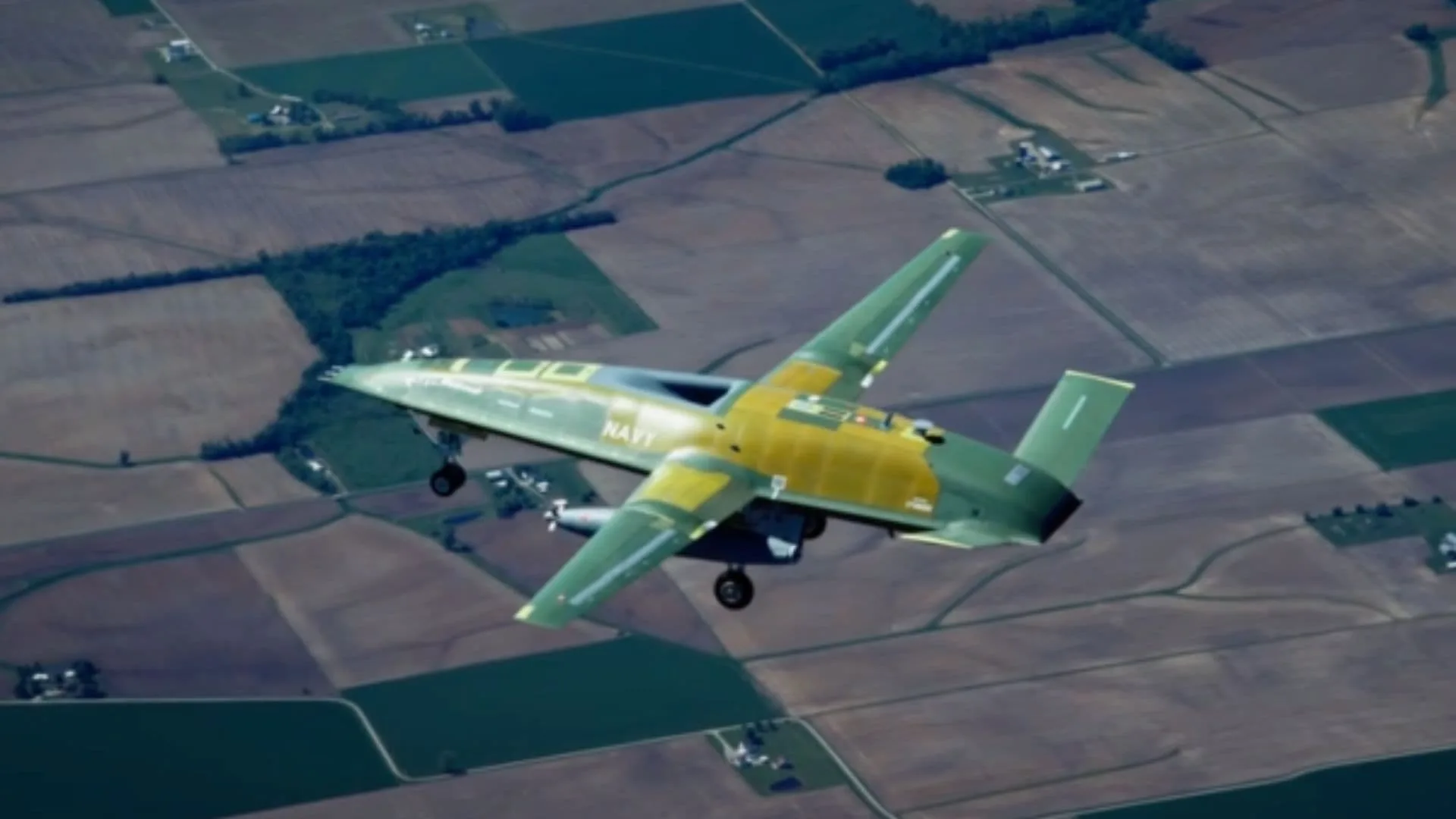
Pesawat tanpa awak yang tidak teridentifikasi di China mirip dengan MQ-25 Stingray AS, tetapi tujuannya masih tidak jelas. Pucheng Neifu Airport menjadi pusat pengembangan pesawat tanpa awak di Tiongkok, menunjukkan fokus negara pada teknologi militer. Kemungkinan misi pesawat ini termasuk pengintaian atau pengisian bahan bakar, meskipun belum ada bukti yang mengkonfirmasi hal tersebut. Pomodo.id - Recent satellite imagery has spotlighted a new uncrewed aircraft in China that bears a striking resemblance to the MQ-25 Stingray, a military drone developed by Boeing for the US Navy. This aircraft was observed at Pucheng Neifu Airport in Shaanxi Province, indicating that this site is becoming an essential testing facility for China's expanding drone technology initiatives. The comparisons to the MQ-25 Stingray are significant, particularly because the suspected Chinese model has a wingspan of approximately 66 feet and a length of 49 feet, while the MQ-25 measures around 75 feet in wingspan and 51 feet in length. Though their designs are similar, the intended role of this Chinese aircraft remains unclear; it could serve as a refueling platform, surveillance system, or a test vehicle for new technologies.Despite the observable similarities, there are notable gaps in our understanding of the aircraft's specific mission. At this time, there is no definitive evidence that confirms it is intended for carrier operations, a primary function of the US MQ-25. Thus, while the design cues may indicate ambition in military capabilities, the lack of clarity regarding its operational purpose raises questions about the strategic intent behind its development. This uncertainty may limit the ability to fully assess the threat level or the potential advancements in military capabilities that this aircraft represents.For Indonesian youth, this development underscores the growing competition in drone technology and military capacities within Asia, particularly in the realm of unmanned systems. As global innovations unfold, it's essential to understand how technologies like drones are not only used for military purposes but also have vast applications across various sectors, including logistics, agriculture, and environmental monitoring. The RM150 million investment into the defense industry from contracts and development projects worldwide signals that jobs related to UAV technology—encompassing engineering, software development, and ecological research—will be on the rise.
The MQ-25 Stingray is an unmanned aerial vehicle developed for the US Navy primarily for aerial refueling missions. By transferring fuel to military aircraft in-flight, it increases the operational range of naval strike groups, enabling them to conduct extended missions without needing to return to base for refueling. This innovation exemplifies how unmanned systems are reshaping military operations and may lead to similar advancements in China's military technology as they seek to establish a competitive edge.
As developments in drone technology continue to evolve, they hold significant implications for various fields in Indonesia, including defense, agriculture, and technology. For young Indonesians looking toward careers in engineering or fields related to technology, understanding these trends will be crucial. This growth in unmanned systems could lead to job opportunities in technology sectors, requiring knowledge and skills in areas such as drone design, data analysis, and automation. There is a pressing need for educational programs to adapt and prepare young professionals for roles in these emerging technologies.In conclusion, the emergence of a Chinese aircraft resembling the MQ-25 Stingray indicates a competitive edge in unmanned technology, not just for military applications but also for civilian uses. As this field progresses, the potential for creating job opportunities and fostering innovation in Indonesia's tech industry should not be overlooked. The future landscape will likely see a greater demand for skilled workers familiar with drones and their diverse applications, paving the way for a robust technological environment as Indonesia navigates its position in a rapidly evolving global arena.---
Diterbitkan oleh Pomodo · Redaksi Pomodo
Terbit: 22 Nov 2026, 22.07 WIB
Ditulis dengan bantuan AI dan diperiksa akurasinya terhadap sumber.
Menemukan kesalahan? Hubungi redaksi → [pomodo.id/contact](https://pomodo.id/contact)